

How to Switch from Fiancé Visa to Spouse Visa Without a Solicitor: A UK Guide
If you entered the UK on a fiancé visa, getting married is only the beginning of your next immigration step. You cannot simply remain in the UK because your marital status has changed. After your wedding, you generally need to apply for a family visa as a spouse before your fiancé’s permission expires. The good news is that you can make the application yourself without instructing a solicitor, provided you understand the requirements and prepare your evidence carefully.
Can you switch from a fiancé visa to a spouse visa in the UK?
Yes. A person who entered the UK on a six-month fiancé, fiancée or proposed civil partner visa can apply from inside the UK after getting married. The new application is essentially an application to extend permission as a spouse under the family route. You must apply before your existing permission expires.
Understanding the difference between the two routes can also help. Our guide on spouse visa or fiancé visa in Stoke-on-Trent and which route is right for your relationship explains how these two family routes work.
How to switch fiancé visa to spouse visa: Step-by-step:
1. Get legally married in the UK
Your marriage must be legally recognised in the UK. A fiancé visa normally gives you six months to marry or enter into a civil partnership. Until you marry, you cannot work or study under this visa.
Once your marriage has taken place, obtain your marriage certificate because it will form an important part of your spouse visa application after marriage.
2. Check the spouse visa requirements:
Before completing the application, check that you and your partner satisfy the relevant spouse visa requirements. You generally need to demonstrate a genuine relationship, intend to live together permanently in the UK, meet the English-language requirement and satisfy the financial rules.
For most new applications, the spouse visa financial requirement is a combined gross annual income of at least £29,000. Depending on your circumstances, permitted savings or other sources of income may also be relevant.
3. Prepare your supporting documents:
Your documents should support every part of the application. Depending on your circumstances, these can include your marriage certificate, passports, evidence of your partner’s immigration status, financial documents, accommodation evidence and proof of your relationship.
Government guidance also identifies evidence such as tenancy agreements, utility or Council Tax bills, joint bank statements and other documents showing your shared life as useful relationship evidence.
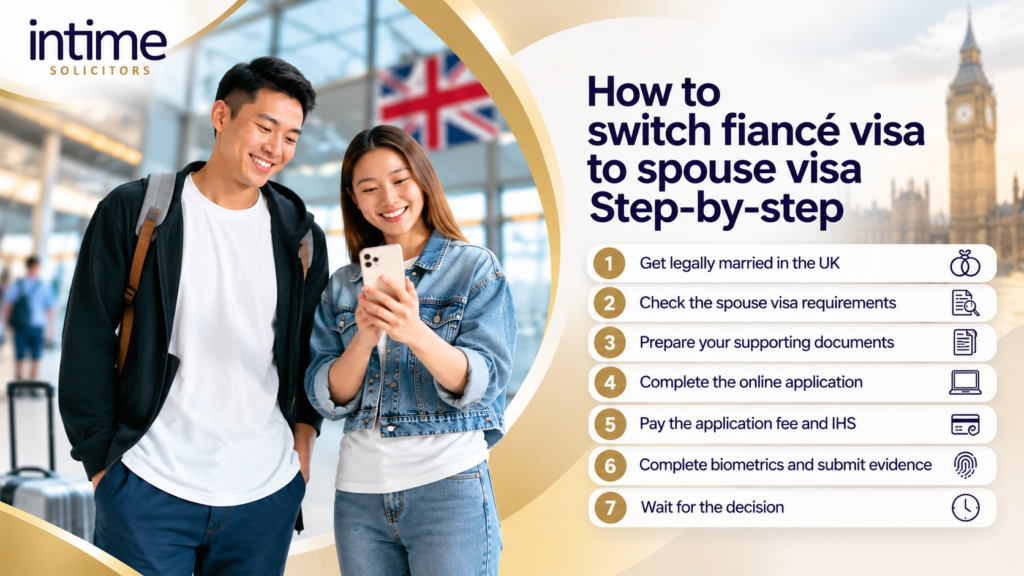
4. Complete the online application:
You can submit the application online from within the UK. Carefully enter information about your relationship, immigration history, finances and accommodation. Check every answer before submitting, particularly dates and details from previous applications.
Applying yourself means you do not have to use a fiancé visa solicitor, but professional advice can still be useful where your circumstances are complicated or you are uncertain about eligibility.
5. Pay the application fee and IHS:
The current in-country family visa application fee for joining a partner is £1,407. You will generally also need to pay the Immigration Health Surcharge. For most applicants, the IHS is £1,035 per year, with the total depending on the period of permission granted.
6. Complete biometrics and submit evidence:
After applying, you will be told how to provide your fingerprints and photograph. You may also need to upload or submit your supporting evidence as instructed.
7. Wait for the decision:
For an in-country partner or spouse application that meets the financial and English-language requirements, the current standard processing time is usually up to eight weeks, although processing can vary.
What if your fiancé visa is about to expire?
Do not wait until after expiry if you can avoid it. Your application should be submitted while your existing permission is still valid. If your circumstances mean you cannot marry or apply before the deadline, the situation requires careful consideration; a spouse visa extension after marriage is not simply an automatic extension of your existing visa.
Can you work after switching to a spouse visa?
A fiancé visa does not normally allow you to work or study. Once your spouse application is approved, the family visa gives you permission to work and study in the UK.
The spouse route can eventually lead to settlement. However, time spent in the UK as a fiancé does not count towards the five-year partner route for ILR. The five-year qualifying period is based on time on the relevant family visa as a partner.
Frequently Asked Questions:
Can I switch from a fiancé visa to a spouse visa in the UK?
Yes. After marrying your partner in the UK, you can apply from inside the UK to extend your stay as their spouse, provided you meet the requirements.
Do I need a solicitor to switch from a fiancé visa to a spouse visa?
No. You can complete the application yourself. However, professional assistance may be worthwhile if your finances, relationship evidence or immigration history is complicated.
When should I apply for a spouse visa after getting married?
Apply after your marriage and before your fiancé’s permission expires. Avoid leaving the application until the final days.
What documents do I need to switch from a fiancé visa to a spouse visa?
Typically, you will need your marriage certificate, identity documents, financial evidence, accommodation information and evidence supporting your relationship. Your exact evidence depends on your circumstances.
How much does it cost to switch from a fiancé visa to a spouse visa?
The current in-country application fee is £1,407, plus the applicable Immigration Health Surcharge.
Does fiancé visa time count towards the five-year settlement route?
No. Time spent as a fiancé, fiancée or proposed civil partner is excluded from the five-year partner route to settlement.
At Intime Immigration Solicitors, we understand that preparing a fiancé visa to spouse visa UK application can feel overwhelming, particularly when you are managing marriage arrangements at the same time. We provide tailored immigration guidance for applicants who want to understand their options, check their evidence and approach the application with greater confidence.
You can also explore our guide to the UK spouse visa extension timeline in Chester and what happens after you apply, for more information about the next stages of the family route.

What Happens at an Immigration Appeal Tribunal Hearing in the UK? A Step-by-Step Guide
Receiving an immigration refusal can be stressful, especially when you have been given a right of appeal and are unsure what happens next. Many appellants worry about what they will be asked, who will be present, whether they need to give evidence, and how the tribunal reaches its decision.
So, what happens at an immigration appeal tribunal hearing in the UK? The process is formal, but understanding each stage can make the experience much easier to prepare for.
An immigration appeal hearing is generally heard by the First-tier Tribunal (Immigration and Asylum Chamber), which is independent of the Home Office. The tribunal considers the evidence and arguments from both sides before reaching a decision.
Here is a step-by-step explanation of what you can generally expect.
What Happens Before an Immigration Appeal Tribunal Hearing?
Before the hearing, you should receive information from the tribunal confirming the date, time and arrangements for your case. Depending on the circumstances, the hearing may take place in person, by video or by telephone.
You may also need to provide supporting documents and comply with directions issued by the tribunal before the hearing. If you need an interpreter or other reasonable adjustments, these should be requested in advance.
A solicitor or regulated immigration adviser can help you understand the issues in your case and prepare your evidence and submissions.
Step 1: Arriving at or Joining the Hearing:
If your First-tier Tribunal immigration hearing is taking place in person, you should arrive in good time and follow the instructions provided by the tribunal.
For a remote hearing, make sure you understand how to access the video or telephone hearing and that your connection and equipment are working.
The tribunal will normally include a judge, tribunal staff and, where applicable, the appellant, their legal representative, a Home Office presenting officer, witnesses and an interpreter.
Step 2: The Judge Explains the Hearing:
At the beginning, the judge may confirm who is present and identify the issues that need to be considered.
There may also be a pre-hearing stage where the tribunal checks whether the case is ready to proceed. This can help establish whether the required documents, representatives and witnesses are available.
The judge is independent of the Home Office and will consider the evidence and arguments presented by both sides.
Step 3: Your Case Is Presented
One of the key parts of the immigration tribunal hearing process is presenting your case.
Your representative, if you have one, may explain why you believe the Home Office decision should be changed. This could involve addressing the reasons given in the refusal decision and explaining how your evidence supports your appeal.
If you are representing yourself, you may present your own case. The tribunal also provides guidance for people who attend without legal representation.
A solicitor or immigration appeal lawyer can help organise the legal arguments and evidence so that the relevant issues are clearly addressed.
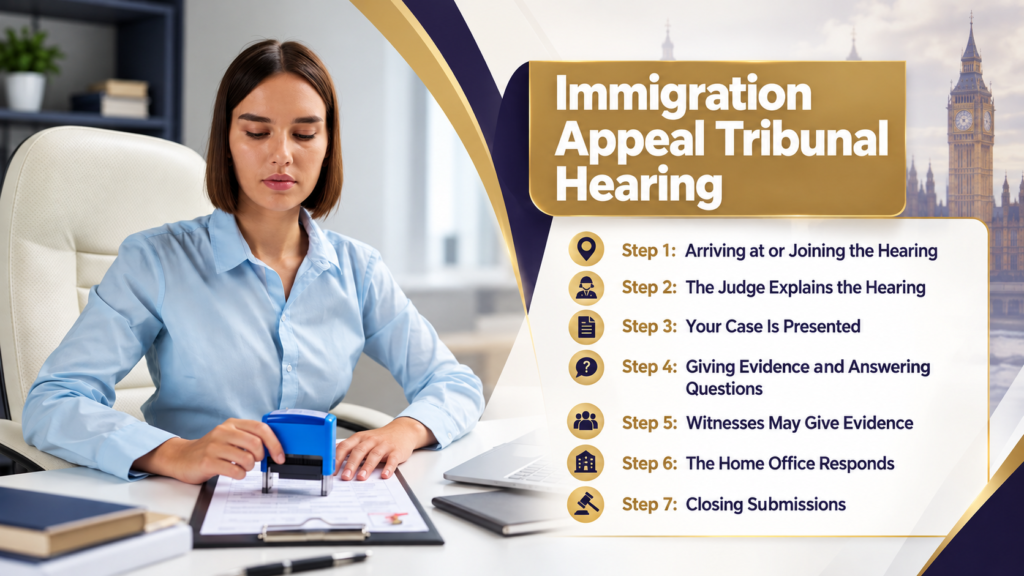
Step 4: Giving Evidence and Answering Questions:
A common concern is what happens at an immigration tribunal when you are asked questions.
You may have to give evidence and answer questions about your circumstances. Depending on the case, questions may come from your own representative, the Home Office presenting officer and the judge.
The exact immigration appeal hearing questions will depend on the reason for the appeal. For example, questions may relate to information in your application, supporting documents, your personal circumstances or matters raised in the Home Office refusal.
Answer questions carefully and truthfully. If you do not understand a question, ask for it to be repeated or explained rather than guessing.
If an interpreter has been requested, they can interpret what is said during the hearing. They do not provide legal advice or act as your representative.
Step 5: Witnesses May Give Evidence:
Some appeals involve witnesses who can provide relevant evidence.
A witness may be asked questions by the relevant parties and the judge. The tribunal may also direct witnesses to wait outside the hearing room until they are required to give evidence.
Whether witnesses are needed depends entirely on the circumstances and evidence of the particular appeal.
Step 6: The Home Office Responds:
The Home Office may have a presenting officer at the hearing. Their role is to present the Home Office’s position and respond to the appeal.
Your representative may then address the points raised by the Home Office. The judge can ask further questions where clarification is needed.
The purpose is not simply to repeat the original application. The tribunal considers the evidence and arguments relevant to the appeal and reaches its own decision.
Step 7: Closing Submissions:
Once evidence and questioning are complete, the representatives may make closing submissions.
This is an opportunity to bring together the important facts, evidence and legal arguments supporting the appeal. If you have an immigration appeal solicitor, they may explain why the tribunal should reach the requested outcome based on the evidence and applicable law.
The judge will then consider the case.
What Happens After an Immigration Appeal Hearing?
The tribunal may provide its decision in different ways, depending on the case. For immigration appeals, you will normally receive a written decision, and GOV.UK states that this is usually provided within four weeks of the hearing.
An appeal may be allowed or dismissed. Importantly, an allowed appeal does not necessarily mean that you automatically receive permission to enter or remain in the UK; the consequences depend on the circumstances and the decision itself.
If the appeal is unsuccessful and you believe the First-tier Tribunal made a legal error, there may be a route to seek permission to appeal to the Upper Tribunal Immigration and Asylum Chamber. An Upper Tribunal appeal is concerned with whether there was a legal error, rather than simply providing another opportunity to re-argue the case.
How Can You Prepare for an Immigration Appeal Hearing?
Good preparation is important. Review your refusal decision, understand the issues in dispute and ensure that relevant evidence has been properly prepared.
You should also know the arrangements for attending the hearing and tell the tribunal in advance if you require an interpreter or other assistance.
Professional legal advice can be particularly useful where the appeal involves complicated immigration rules, extensive evidence or disputed facts.
An experienced immigration appeal solicitor can explain the hearing process, help prepare your case and represent you where appropriate. But are you confused about when to seek legal assistance? Click here.
Frequently Asked Questions (FAQs):
1. How long does an immigration appeal hearing take?
There is no single standard duration. The length can vary depending on the complexity of the case, the number of witnesses, the evidence and the issues the judge needs to consider.
2. Can I attend an immigration appeal hearing without a lawyer?
Yes. You can represent yourself in the First-tier Tribunal, although you may choose to obtain advice or representation from a solicitor or regulated immigration adviser.
3. What is the difference between the First-tier Tribunal and Upper Tribunal?
The First-tier Tribunal normally considers the original immigration appeal. The Upper Tribunal can consider an appeal against a First-tier Tribunal decision where there is an alleged legal error and permission to appeal has been granted.
Get Professional Support for Your Immigration Appeal:
Knowing what happens at an immigration appeal tribunal hearing in the UK can help you approach the process with greater clarity. However, every appeal is different, and the evidence and legal issues involved will determine how your hearing is conducted.
At Intime Immigration Solicitor, our professional immigration advice can help you understand your appeal, prepare the relevant evidence and navigate the tribunal process. If you have received an immigration refusal and have a right of appeal, we can help you obtain appropriate legal advice early and also help you understand the next steps and prepare your case properly.

Spouse Visa or Fiancé Visa in Stoke-on-Trent: Which Route Is Right for Your Relationship?
Planning your future with your partner in the UK is exciting, but choosing the correct immigration route can quickly become confusing. If you are deciding between a spouse visa and fiancé visa, the right option depends largely on whether you are already married, where you plan to marry, and when you want to begin living together in the UK.
Understanding the difference between spouse visa and fiancé visa can help you avoid an unnecessary application, extra costs, or delays.
When Is a UK Spouse Visa the Right Option?
A spouse visa is generally suitable if you are already married or in a civil partnership recognised in the UK and your partner is British, Irish, settled, or otherwise eligible under the family visa rules. You must also intend to live together permanently in the UK.
Applicants usually need to satisfy the spouse visa requirements in the UK, including relationship, English-language and financial requirements. For most new applications, the minimum income requirement is £29,000, although different rules can apply in specific circumstances.
If you are already married and want to start your life together in Britain without first entering on a fiancé route, speaking with a spouse visa lawyer in Stoke-on-Trent can help you understand the evidence required and prepare your application properly.
For a practical overview of the process, you can also read our 5-minute guide to the UK spouse visa.
When Does a UK Fiancé Visa Make More Sense?
A fiancé visa may be appropriate if you are engaged but have not yet married and intend to marry or enter a civil partnership in the UK within six months of arrival.
The fiancé visa requirements in the UK include demonstrating a genuine relationship, meeting the relevant financial and English-language requirements, and showing that previous marriages or civil partnerships have ended where applicable.
One important difference is that a fiancé visa does not allow you to work or study during the six-month period. After getting married, you must apply to extend your stay as a spouse before you can work or study.
So, if your wedding is planned in Stoke-on-Trent and you need time to organise it after arriving, a UK fiancé visa Stoke-on-Trent application may be the route to consider.
Spouse Visa or Fiancé Visa UK: What Should Couples Consider?
The key distinction is simple: a spouse visa is for couples who are already married or otherwise qualify as partners, while a fiancé visa is designed for couples who intend to marry in the UK within six months.

Your decision may therefore depend on:
- Whether you are already legally married
- Where you intend to marry
- Whether you need to work immediately after arrival
- Whether you can satisfy the relevant financial requirements
- Your long-term settlement plans
Time spent in the UK as a fiancé does not count towards the five-year partner route for settlement, so this is an important consideration when planning your immigration journey.
If you are unsure which route fits your circumstances, we can review your relationship history, immigration status and future plans before you apply.
Our immigration solicitor Stoke-on-Trent family visa team can also help you understand the evidence and application stages.
Can You Switch From a Fiancé Visa to Spouse Visa?
Yes. After marrying in the UK, you can apply to extend your stay as a spouse, provided you meet the relevant requirements. The fiancé period itself does not count towards the five-year settlement period.
Planning ahead is particularly important because the spouse application involves fresh evidence and fees. If you are later extending your spouse visa, our guide on what happens after applying for a UK spouse visa extension explains the next stages.
FAQs:
1. Can I work on a fiancé visa?
No. A fiancé visa does not permit employment or study. You can work or study after your spouse’s application is approved.
2. Is a fiancé visa the same as a spouse visa?
No. A fiancé visa allows you to enter the UK to marry within six months, while a spouse visa is for eligible couples who are already married or otherwise meet the partner-route requirements.
3. Can a spouse visa lawyer in Stoke-on-Trent help me choose the route?
Yes. Professional advice can help you assess your relationship circumstances, eligibility and supporting evidence before you submit an application.
Get Personalised Family Visa Guidance in Stoke-on-Trent:
Choosing the correct route at the beginning can make your immigration journey much clearer.
At Intime Immigration Solicitors, we provide tailored guidance for couples navigating spouse and fiancé visa applications in Stoke-on-Trent.
Contact us today to discuss your situation and get professional advice on the family visa route that applies to you.

How to Choose the Best Immigration Law Firm in Manchester for Business Immigration
Are you planning to hire international talent or expand your business into the UK? Now, this can create exciting opportunities, but the immigration process can quickly become overwhelming. From sponsor licence requirements and Skilled Worker applications to ongoing compliance duties, even a small error can lead to delays and unnecessary complications.
This is where specialist legal support can make a real difference. At Intime Immigration, we help businesses understand their immigration responsibilities and identify suitable routes for their needs. Choosing the right legal team, however, is just as important as understanding the immigration process itself.
Let’s find out how we can help in choosing the best immigration law firm in Manchester.Look for a Specialist with Business Immigration Experience:
Not every immigration solicitor handles corporate immigration matters regularly. When searching for the best immigration law firm in Manchester, look for a firm with experience in business-focused immigration cases.
Business immigration can involve sponsor licences, Skilled Worker visas, Global Talent routes, Innovator visas, UK Expansion Worker routes and other immigration options. A solicitor familiar with these areas can better understand the challenges employers and business owners face.
Intime Immigration provides support across a range of UK business immigration matters, including sponsorship and work-related routes.
Check Their Experience With Employers and Sponsorship:
If your business plans to recruit overseas workers, sponsorship is often a key consideration. Therefore, choose business immigration solicitors in Manchester who understand both the initial application process and the responsibilities that can continue after a licence is granted.
-
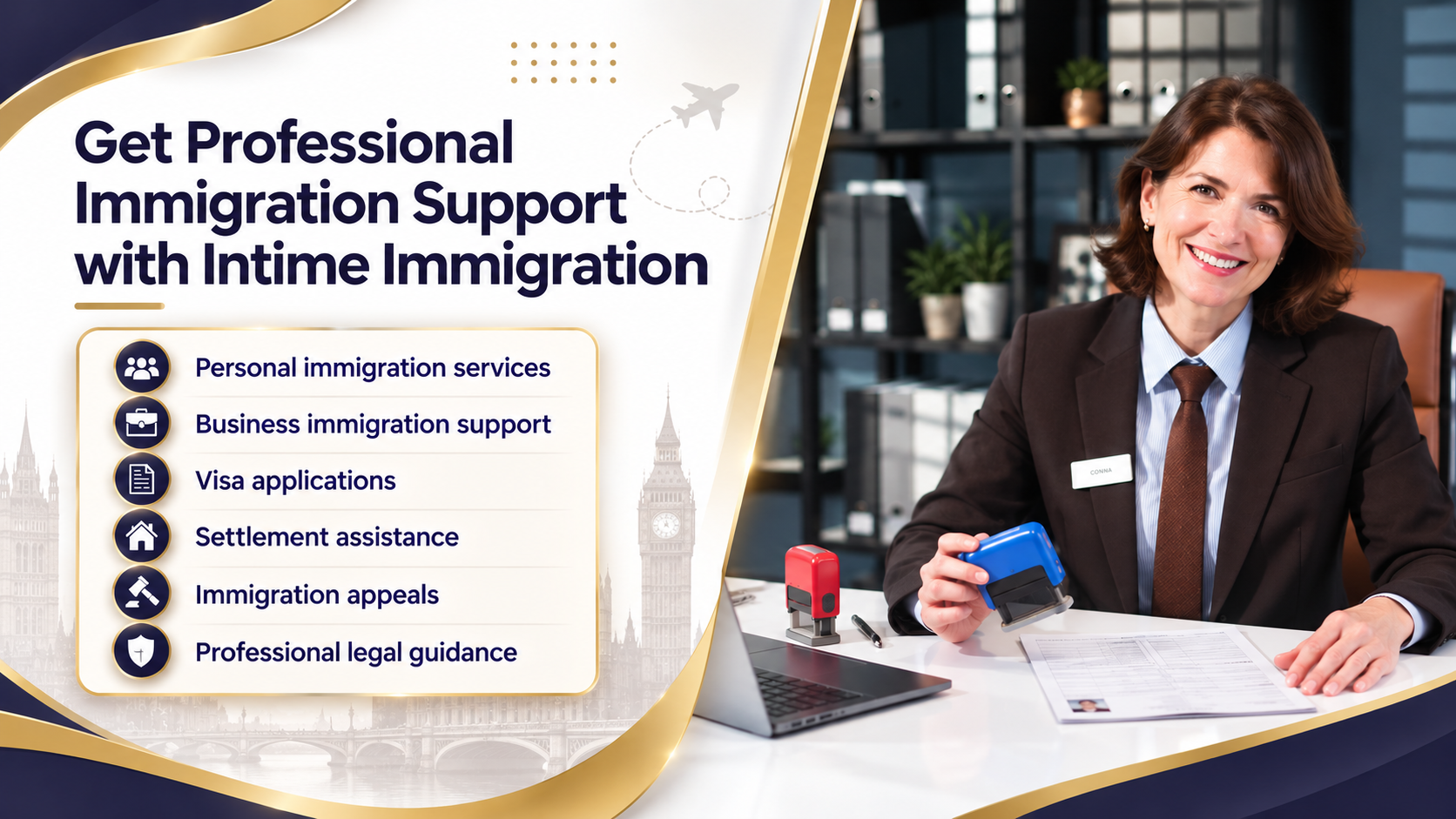
- Sponsor licence applications.
-
- Sponsorship compliance and employer duties.
-
- Certificates of Sponsorship.
-
- Skilled Worker visa applications.
-
- Right-to-work guidance.
Make Sure You Receive Clear & Sound Advice:
Every business has different recruitment plans, workforce requirements and long-term goals. A good business immigration lawyer in Manchester should take the time to understand your circumstances rather than offering a one-size-fits-all solution.
During your initial consultation, make sure the solicitor explains the available options clearly and answers your questions in straightforward language. Good immigration legal advice for employers should help you understand both the immediate process and the responsibilities involved.
For more insight into how specialist solicitors can support employers recruiting international talent, read our guide on how business immigration solicitors help UK businesses hire international talent.
Verify Professional Credentials and Transparency:
Trust is essential when choosing an immigration law firm. Before instructing a solicitor, check their professional credentials and regulatory status.You should also ask about fees and the scope of the service. Clear communication about costs, documentation and the work involved can help you make an informed decision. Avoid choosing a firm based solely on the lowest price; the right legal support should provide value through relevant knowledge, clear advice and appropriate assistance.
Consider Communication and Accessibility:
Immigration matters can be time-sensitive, particularly when recruitment plans depend on visa applications or sponsorship arrangements. Choose a firm that communicates clearly and keeps you informed throughout the process.
It is also useful to know who will handle your case and whether you can speak directly with a qualified solicitor when you need guidance. A responsive legal team can make a complex process feel more manageable.
For additional practical advice, explore our article, Finding the Best UK Business Immigration Attorney: 4 Pro Tips.
Conclusion:
Choosing the best immigration law firm in Manchester involves more than simply searching online. Look for relevant business immigration experience, employer-focused knowledge, transparent communication and advice tailored to your circumstances.
At Intime Immigration, we provide strategic support for businesses navigating UK immigration matters. Whether you need help with sponsorship, international recruitment or a Skilled Worker visa, our team is ready to help you move forward with greater clarity.
Contact us today to discuss your business immigration requirements.FAQs:
1. How do I choose a business immigration solicitor?Look for specialist experience, professional credentials, transparent fees and knowledge of employer immigration requirements.
2. Can a sponsor licence solicitor help with compliance?Yes. A specialist solicitor can advise businesses on sponsorship duties and relevant compliance responsibilities.
3. Do businesses need a Skilled Worker visa solicitor?While legal representation is not mandatory, a specialist can provide guidance on eligibility, documentation and the application process.

How to Choose Good Immigration Solicitors Near You: What to Look for in a Specialist UK Immigration Lawyer
Finding the right immigration solicitor can make a significant difference when you are dealing with a UK visa, settlement application, citizenship matter or immigration appeal. But with so many firms available, how do you know which solicitor is right for your circumstances?
If you are searching for good immigration solicitors in the UK, it is important to look beyond location and price. The right professional should have relevant immigration expertise, understand your circumstances and provide clear, practical legal guidance.
How Do I Find a Good Immigration Solicitor?
Start by identifying solicitors who specialise specifically in UK immigration law. Immigration rules can be complex and change over time, so experience in this area matters.
Look at whether the solicitor regularly handles cases similar to yours. For example, someone applying for a spouse visa may benefit from a solicitor experienced in family immigration, while an employer dealing with sponsorship may need business immigration expertise.
You should also check whether the firm is properly authorised to provide legal services. Intime Immigration Solicitors is regulated by the Solicitors Regulation Authority (SRA) and provides immigration advice to individuals, families and businesses.
What Should I Look for in an Immigration Solicitor?
When comparing UK immigration specialist solicitors, consider more than their website or proximity to your home. A suitable solicitor should be able to explain your options clearly and show that they understand the type of immigration matter you are facing.
Consider these factors:
- Relevant experience: Look for experience with your specific visa or immigration route.
- Specialist knowledge: Immigration law should be a core area of the firm’s practice.
- Clear communication: You should understand what is required and why.
- Professional regulation: Verify that the solicitor or firm is authorised to provide legal services.
- Transparent service: Understand what assistance is included and how your matter will be managed.
- Accessibility: Consider whether consultations are convenient for you, whether locally or remotely.
Choosing specialist immigration solicitors is not necessarily about finding the firm closest to you. It is about finding appropriate expertise for your individual circumstances. Intime’s own guidance similarly recommends considering specialist immigration experience rather than choosing a solicitor solely because they are nearby.

Does Location Matter When Choosing Immigration Solicitors Near Me?
Searching for an immigration solicitor nearby can be useful if you prefer face-to-face meetings or need convenient access to an office. However, location should not be the only deciding factor.
For clients in Greater Manchester and the North West, Intime has offices in Manchester, Chester and Stoke-on-Trent, with additional meeting locations in areas including Stockport and Warrington.
If you are specifically looking for an immigration solicitor in Manchester, you can also read Where Can I Find an Immigration Solicitor Near Me in Manchester? A Practical UK Guide for more guidance on finding appropriate local support.
Do I Need a Specialist Immigration Solicitor?
Not every immigration matter requires professional representation. Some applications may be straightforward, while others can involve complicated eligibility rules, extensive evidence, previous refusals or unusual personal circumstances.
A specialist immigration lawyer UK can be particularly valuable when your situation involves multiple immigration issues or when an error could have serious consequences. Professional advice may help you understand the available routes, identify potential issues and prepare your case appropriately.
The key is to choose a solicitor whose experience matches the nature of your matter rather than assuming that every immigration firm provides the same level of expertise.
Why Choose Intime Immigration Solicitors?
At Intime Immigration Solicitors, we provide specialist UK immigration advice across a broad range of personal and business matters, including family visas, work visas, settlement, British nationality and immigration appeals. We describe our approach as tailored to each client’s circumstances and offer confidential consultations with qualified solicitors.
Before instructing any firm, it can also be useful to prepare specific questions about experience, case management and costs. For additional guidance, see 4 Important Questions to Ask an Immigration Solicitor in the UK Before Hiring.
FAQs:
1. Can I change my immigration solicitor after instructing one?
In many circumstances, you can change legal representatives if you are unhappy with the service you are receiving. However, you should consider the stage of your application and any practical or financial implications before making a change.
2. Can an immigration solicitor communicate with the Home Office on my behalf?
Depending on the service you instruct them to provide, a solicitor may be able to communicate with the Home Office and handle relevant correspondence connected with your case. The exact scope of representation should be agreed when you instruct the firm.
3. How can I prepare for an initial immigration consultation?
Write down your main immigration concerns and prepare a timeline of relevant events, including previous applications or decisions. Being open about your circumstances, even where something may seem unimportant can help the solicitor understand your situation more effectively.
Find the Right Immigration Legal Support with Intime Immigration Solicitors:
Choosing good immigration solicitors is about finding more than a convenient office or an attractive fee. Look for specialist knowledge, professional regulation, relevant experience and a clear approach to your particular circumstances.
If you are searching for solicitors near me for immigration, Intime Immigration Solicitors can help you understand your options and identify an appropriate way forward.
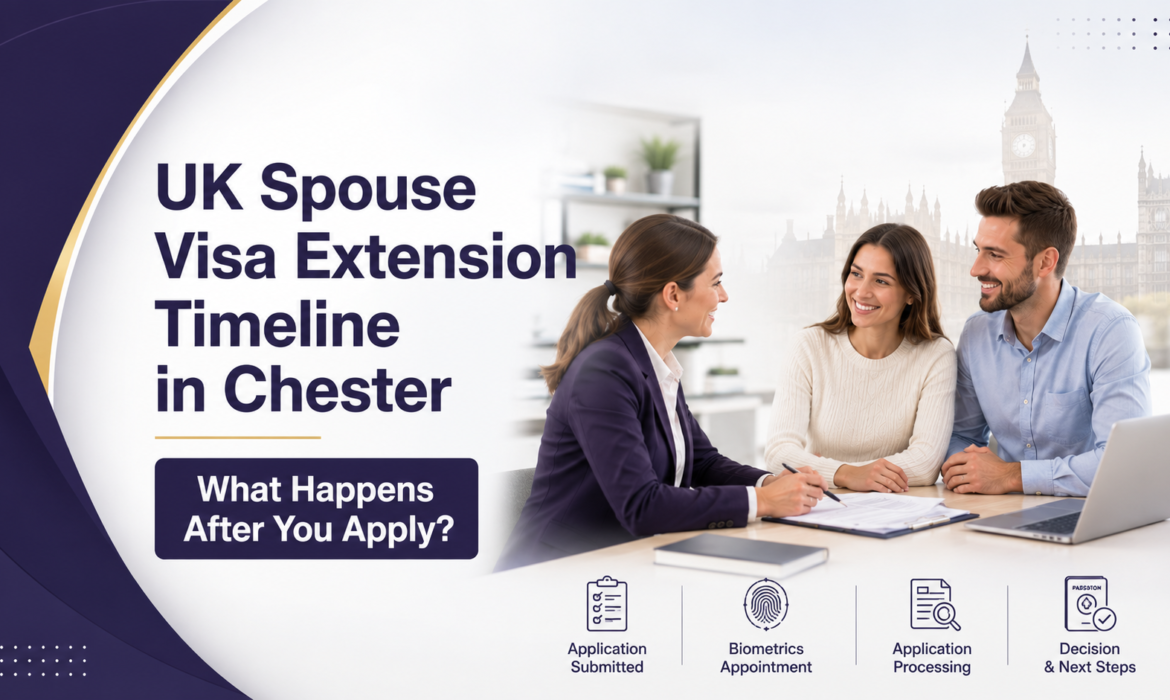
UK Spouse Visa Extension Timeline in Chester: What Happens After You Apply?
Applying for a UK spouse visa extension in Chester can feel overwhelming, especially when you’re unsure about what happens after you click “submit.” Questions about processing times, biometrics, travel restrictions, and decision timelines are common among applicants. Understanding the process can help you prepare for each stage and avoid unnecessary stress while waiting for a decision.
If you’re extending your leave to remain with your partner, here’s what you can expect after submitting your application.
What Happens Immediately After Submitting Your Spouse Visa Extension Application?
Once your application is submitted online and the relevant fee is paid, you’ll receive confirmation that your application has been successfully lodged. At this stage, you’ll also be directed to book a biometric appointment if one is required.
Your application will not progress until all mandatory steps have been completed, including submitting supporting documents and providing your biometric information where applicable. Ensuring that every document is accurate and complete can help prevent unnecessary delays.
If you’re preparing your documents, our detailed Document Checklist for UK Spouse Visa: The Complete Couple-Friendly Guide can help you understand what evidence may be required.
Why Are Biometrics So Important?
One of the most important stages in the spouse visa extension process is attending your spouse visa extension biometrics appointment. During this appointment, your fingerprints and photograph are collected to verify your identity.
Missing your appointment or providing incomplete information can delay the processing of your application. Before attending, make sure you’ve uploaded or prepared all the required documents according to the instructions provided with your application.
How Long Does a Spouse Visa Extension Take?
One of the most frequently asked questions is about spouse visa extension processing time.
The exact timeline depends on factors such as the type of service selected, application volumes, and whether additional information is requested. Every application is assessed individually, so decision times can vary.
To reduce the likelihood of delays, it’s important to submit a well-prepared application supported by accurate documentation that satisfies the relevant immigration requirements.
Can You Travel While Waiting for a Spouse Visa Extension?
Many applicants ask, “Can I travel while waiting for my spouse visa extension?”
If you have submitted an in-country spouse visa extension application, you should be very careful about travelling while your application is pending. Under paragraph 34K of the Immigration Rules, if you leave the Common Travel Area (CTA) before a decision is made on your application, your application will be treated as withdrawn on the date you leave the CTA.
The CTA consists of the UK, Republic of Ireland, Channel Islands and Isle of Man. Therefore, travelling to a destination outside these areas while your spouse visa extension is awaiting a decision can cause your pending application to be withdrawn.
For this reason, applicants should avoid international travel outside the CTA while their in-country spouse visa extension application is pending. If you are considering travelling, it is advisable to obtain professional immigration advice before making arrangements so you can understand how your specific circumstances may affect your application.
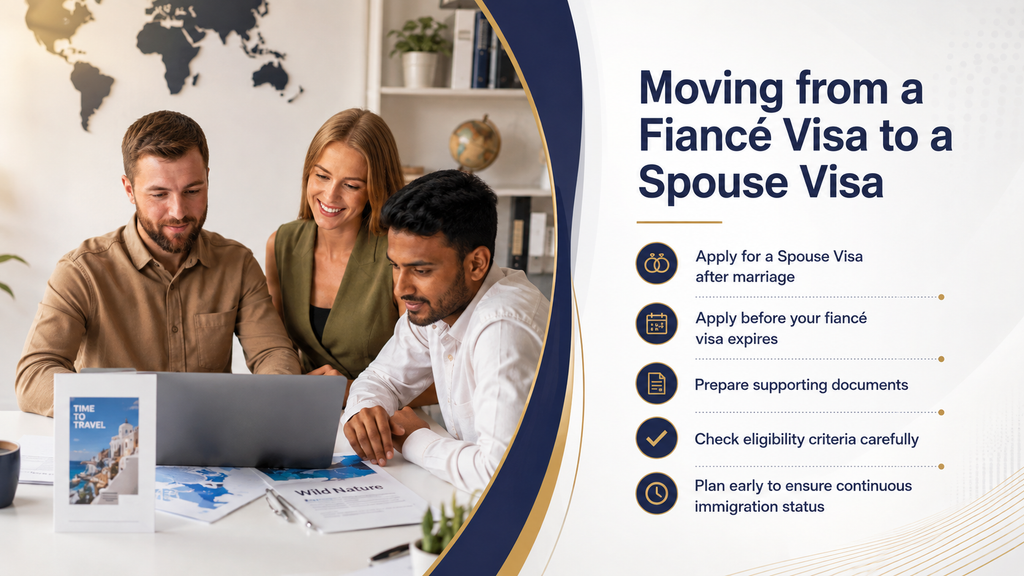
Moving from a Fiancé Visa to a Spouse Visa:
If you’re currently in the UK on a fiancé visa, you’ll need to apply for a spouse visa after your marriage or civil partnership before your current permission expires.
Understanding the transition from a UK fiancé visa in Chester to a spouse visa is essential, as the requirements, supporting documents, and eligibility criteria differ. Planning your next application early can help ensure continuity of your immigration status.
You can learn more about the process by visiting our dedicated Fiancé Visa and Spouse Visa service pages.
How Can Legal Guidance Help?
Although the application process may appear straightforward, even small errors or missing documents can result in delays or requests for additional evidence. Professional legal guidance can help ensure your application is complete, your supporting documents meet Home Office expectations, and any complex circumstances are addressed appropriately.
At Intime Immigration Solicitors, we assist clients with spouse visa extensions, fiancé visa applications, document preparation, and immigration advice tailored to their individual circumstances. We work closely with our clients to prepare thorough applications and provide guidance throughout every stage of the process, helping them navigate UK immigration requirements with confidence.
FAQs:
1. How long does a UK spouse visa extension take?
Processing times vary depending on the application route, service selected, and individual circumstances. Some applications may require additional checks, which can affect the overall decision time.
2. Can I travel outside the UK while waiting for my spouse visa extension?
Travelling outside the UK while an in-country spouse visa extension application is pending may have implications for your application. It’s advisable to seek legal advice before making travel plans.
3. Can I switch from a fiancé visa to a spouse visa in the UK?
Yes. After getting married or entering into a civil partnership, eligible applicants can apply to switch from a fiancé visa to a spouse visa, provided they meet the relevant immigration requirements before their current permission expires.
Let Us Help You With Your Application:
Applying for a UK spouse visa extension in Chester doesn’t have to be complicated when you have the right legal support.
At Intime Immigration Solicitors, we guide our clients through every stage of the application process, from document preparation and eligibility assessments to submission and ongoing support. Whether you’re extending your spouse visa or transitioning from a UK fiancé visa in Chester, we’re here to help you move forward with confidence.
Contact us today to discuss your immigration needs and let us help you prepare a strong, well-supported application.
What Is the Minimum Income Requirement for a UK Spouse Visa? A 2026 Guide for Couples
Planning a life together in the UK is exciting, but the financial side of a spouse visa can feel confusing. Many couples ask the same question: what is the minimum income requirement for a UK spouse visa? Knowing the current threshold, what income can count, and which documents you need can make preparing your application much easier.
For most new UK spouse visa applications, the minimum income requirement is £29,000 per year. However, there are different ways to meet the spouse visa financial requirement, and special rules may apply depending on your circumstances.
What Is the Minimum Income Requirement for a UK Spouse Visa?
For most couples making a new application under the UK family visa partner route, the required gross annual income is £29,000.
The requirement can generally be met through qualifying sources such as employment income, self-employment, pension income, certain non-employment income and permitted cash savings. The exact evidence required depends on the income category you rely on.
It is important to remember that earning £29,000 does not automatically mean your application meets the financial requirement. Your income must also be evidenced in the way required by the Immigration Rules.
What Income Can Count Towards the UK Spouse Visa Income Threshold?
The UK spouse visa income threshold can potentially be met through different financial sources.
These may include:
- Employment income
- Self-employment income
- Income from a limited company, where the relevant rules are met
- Pension income
- Rental income and certain other non-employment income
- Cash savings above £16,000
Whether a particular source can be used, and whether different sources can be combined, depends on the applicable financial category and your circumstances.
This is why couples should assess their income category before simply adding together figures from different sources.

Can Savings Replace Employment Income for a Spouse Visa?
Yes. Cash savings can potentially be used instead of income or alongside qualifying income.
For the standard £29,000 requirement, the rules provide for £16,000 in savings plus additional savings equal to 2.5 times the shortfall between qualifying annual income and £29,000. If you are relying entirely on savings, this means £88,500 is required.
There are also specific requirements about how the savings are held and evidenced. For example, the Home Office rules generally require evidence showing that the required cash savings have been held for the relevant six-month period.
Does Self-Employment Count Towards the Spouse Visa Financial Requirement?
It depends on when you first applied as a partner.
If you first applied as a partner on or after 11 April 2024, the £29,000 requirement generally applies. However, if you first applied before 11 April 2024 and are extending with the same partner, transitional rules can mean the previous £18,600 threshold applies, with additional requirements for certain dependent children.
Because the rules can differ between an initial application and an extension, it is important to check which route applies to you.
Are There Any Exemptions From the £29,000 Requirement?
Yes. The standard minimum income requirement does not apply in the usual way where the UK-based partner receives certain specified disability or carer-related benefits. Instead, the couple generally needs to satisfy an adequate maintenance requirement, demonstrating that they can support and accommodate themselves without relying on additional public funds.
There are also circumstances where a couple may still be able to apply despite not meeting the financial requirement, including certain cases involving children or human rights considerations. These cases can be more complex and should be assessed individually.
What Financial Documents Do You Need for a Spouse Visa?
Providing the correct spouse visa financial evidence is just as important as meeting the required income.
For employment income, evidence can include payslips, bank statements and an employer’s letter confirming details such as your employment, salary and contract. Other income sources have different documentary requirements.
For help organising your documents, you can read our UK spouse visa document checklist guide before preparing your application.
Does the £29,000 Requirement Apply to Spouse Visa Extensions?
It depends on when you first applied as a partner.
If you first applied as a partner on or after 11 April 2024, the £29,000 requirement generally applies. However, if you first applied before 11 April 2024 and are extending with the same partner, transitional rules can mean the previous £18,600 threshold applies, with additional requirements for certain dependent children.
Because the rules can differ between an initial application and an extension, it is important to check which route applies to you.
What If Universal Credit Is Part of Your Finances?
Universal Credit can create uncertainty for couples preparing a spouse visa application. Receiving Universal Credit does not, by itself, mean that the standard minimum income requirement is automatically waived. The relevant rules depend on the benefits received and the circumstances of the application.
If this applies to you, our guide on whether Universal Credit affects a spouse visa application provides further information.
Final Thoughts: Meeting the UK Spouse Visa Financial Requirement
Understanding the spouse visa financial requirement before you apply can help you avoid unnecessary delays and evidence problems. For most new applications in 2026, the required gross annual income is £29,000, but savings, self-employment, non-employment income, benefits and transitional rules can change how the requirement applies.
At Intime Immigration Solicitors, we help couples understand the financial requirements, assess their circumstances and prepare the evidence needed for their UK spouse visa application.
If you are unsure whether your income, savings or financial circumstances meet the requirements, contact us today to discuss your case with our immigration solicitors and get tailored guidance.
FAQs:
What is the minimum income requirement for a UK spouse visa?
For most new applications, the minimum gross annual income requirement is £29,000.
Can savings replace employment income?
Yes. Permitted cash savings can potentially meet the requirement, subject to the applicable calculation and evidence rules.
Does self-employment count towards the financial requirement?
Yes. Qualifying self-employment income can count, but specific rules determine how it must be calculated and evidenced.
What financial documents are accepted?
The evidence depends on your income source. Employment applicants may need payslips, bank statements and an employer letter, while other income categories have different requirements.
Does the income requirement apply to visa extensions?
It can. Transitional rules may apply if you first applied as a partner before 11 April 2024 and are extending with the same partner.

Can You Switch from a Standard Visitor Visa to Another UK Visa? A 2026 Guide for Families in Stoke-on-Trent
Imagine you arrive in the UK on a Standard Visitor visa to spend time with family in Stoke-on-Trent. During your visit, your circumstances change. Perhaps you realise you want to stay with a family member longer, your child may need a different immigration route, or you discover that you may qualify for a visa based on your family history.
A natural question follows: Can you simply switch your visitor visa to another UK visa while you are already here?
The short answer is: usually, no. The UK Visitor route is designed for temporary visits, and immigration rules place important restrictions on switching from visitor status to other visa categories.
Here is what families in Stoke-on-Trent need to understand before making any plans.
What Is a Standard Visitor Visa?
A Standard Visitor visa is intended for temporary visits to the UK, such as tourism, visiting family and friends, certain business activities, or permitted medical treatment. Visitors generally need to demonstrate that they are genuine visitors, intend to leave the UK at the end of their visit, and can support themselves without relying on public funds.
If you are researching standard visit visa Stoke-on-Trent requirements, it is important to understand that having family in the UK does not automatically give you a right to remain beyond your visitor permission. You can learn more about the requirements and application process through our Standard Visit Visa guidance.
Can You Switch a Visitor Visa to Another UK Visa?
This is where many families become confused.
A visitor visa is not generally a route that allows you to switch into another immigration category from inside the UK. For example, official websites specifically state that someone in the UK as a visitor will usually need to leave the UK to apply for a family visa.
Similarly, some work routes explicitly prevent applicants who are currently in the UK on a visit visa from switching to that route.
This means you should not assume that you can enter the UK as a visitor and then change your immigration status simply because your circumstances change.
What About a Family Visa?
Suppose you came to Stoke-on-Trent to visit your spouse, parent or child and now want to remain in the UK with them.
Family visas can allow eligible people to live with qualifying family members in the UK, but visitor restrictions still matter.
The official website states that if you have permission to be in the UK as a visitor, you will usually need to leave the UK to apply for a family visa.
There can be specific exceptions depending on your circumstances, so it is important not to make assumptions about your eligibility.
For families considering a child visa Stoke-on-Trent route, the child’s age, family circumstances and the immigration status of the parent can all be relevant. The correct application route needs to be assessed individually.

What If You Qualify for a UK Ancestry Visa?
Another situation that can cause confusion involves family history.
If you have a qualifying UK-born grandparent, you may wonder whether you can enter as a visitor and then change to an Ancestry visa.
The answer is important: you cannot switch into a UK Ancestry visa if you came to the UK on a different visa.
Our Ancestry Visa guidance explains the route, including requirements relating to ancestry, financial independence and the intention to work in the UK. Our information confirms that the route is available to qualifying Commonwealth nationals who meet the relevant requirements.
Therefore, if you are researching ancestry visa Stoke-on-Trent, check your eligibility and application route before travelling to the UK.
What Should Families Do Instead?
If you discover that another visa may be more suitable during your visit, do not simply remain in the UK after your visitor permission expires.
Start by identifying the immigration route that actually matches your circumstances. Then check whether that route allows an application from inside the UK or requires you to apply from outside.
Gather the necessary evidence early, particularly where family relationships, financial circumstances or ancestry need to be demonstrated.
If your situation involves children, our Child Visa guidance can help you understand the relevant route and requirements.
How Can Intime Immigration Solicitors in Stoke-on-Trent Help?
UK immigration rules can become particularly complicated when your family circumstances involve multiple visa categories.
We help clients understand their options, assess their circumstances and prepare applications according to the relevant requirements. Our immigration solicitors in Stoke-on-Trent provide tailored guidance across a range of UK immigration matters.
Whether you are researching standard visit visa Stoke-on-Trent requirements or considering a child visa Stoke-on-Trent, getting advice before taking action can help you avoid making assumptions that could affect your immigration position.
Likewise, if you are exploring an ancestry visa Stoke-on-Trent, we can help you understand whether the route is appropriate and how the application process works.
Frequently Asked Questions:
1. Can I switch from a visitor visa to a family visa in the UK?
Usually, no. People who have permission to be in the UK as visitors will usually need to leave the UK to apply for a family visa. Specific exceptions may apply depending on individual circumstances.
2. Can I switch from a visitor visa to an Ancestry visa?
No. The UK Ancestry visa rules state that you cannot switch into this route if you came to the UK on another visa.
3. What should I do if my family circumstances change while I am visiting?
Do not assume you can simply switch visa categories. Check the requirements of the visa you may qualify for and whether an application can be made inside the UK. Professional immigration advice can help you understand the appropriate next step.
Need advice about changing your UK immigration route? Contact us today to discuss your circumstances with our immigration team in Stoke-on-Trent.

Where Can I Find an Immigration Solicitor Near Me in Manchester? A Practical UK Guide
If you’re searching for an immigration solicitor near me in Manchester, you’re probably looking for trusted legal advice on a visa application, settlement, family immigration, or an appeal. The right solicitor can help you understand your options, prepare accurate applications, and avoid costly mistakes. Choosing an experienced legal professional is not just about convenience. It is about finding someone with the knowledge and experience to guide you through UK immigration rules with confidence.
How Do You Find the Right Immigration Solicitor Near You?
A good immigration solicitor should offer more than just legal knowledge. They should understand your circumstances, explain the process clearly, and provide advice that fits your goals.
Here are a few things to look for:
- Experience with your type of immigration matter, whether it involves work visas, family visas, settlement, or appeals.
- Clear communication and transparent fees.
- Positive client reviews and a proven track record.
- Proper regulation and professional accreditation.
If you are asking, “Where can I find an immigration solicitor near me?”, start by looking for firms that specialise in immigration law rather than general legal services. A dedicated visa solicitor or family immigration solicitor is more likely to understand the latest immigration requirements.
You should also verify that your adviser is authorised before receiving immigration legal advice.
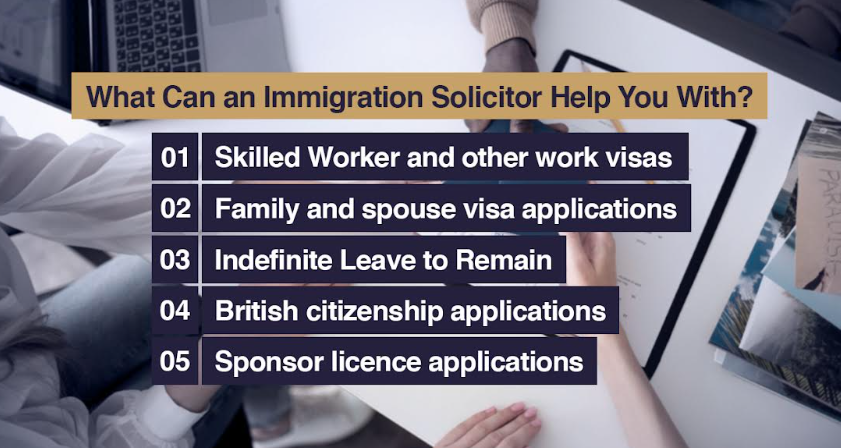
What Can an Immigration Solicitor Help You With?
An immigration solicitor provides guidance across a wide range of immigration matters. Their role is to ensure your application is complete, supported by the correct evidence, and submitted in line with Home Office requirements.
Depending on your situation, they may assist with:
- Skilled Worker and other work visas.
- Family and spouse visa applications.
- Indefinite Leave to Remain.
- British citizenship applications.
- Sponsor licence applications.
- Visa refusals and appeals through an experienced immigration appeal solicitor
Professional legal advice can also reduce delays by identifying issues before an application is submitted.
How to Choose Local Immigration Support That Fits Your Needs?
Many people prefer working with a local solicitor because it makes communication and document handling easier. Whether you are searching for an immigration solicitor in Manchester, Chester, or Stoke-on-Trent, choosing a firm with experience in UK immigration law is more important than simply choosing the closest office.
At Intime Immigration Solicitors, we provide tailored immigration legal advice for individuals, families, and businesses across the UK. We support clients with everything from first-time visa applications to settlement and immigration appeals.
If you are based in the North West or surrounding areas, you can learn more about our immigration solicitors in Chester, Manchester, and Stoke-on-Trent. We also regularly publish practical immigration updates and guidance to help clients stay informed about changes to UK immigration law.
Our approach focuses on understanding your circumstances first, then recommending the most suitable legal solution. Every case is different, which is why we provide advice based on your individual immigration history and future plans.
What Should You Do Before Booking a Consultation?
Preparing for your first meeting can save time and help your solicitor assess your case quickly.
Bring documents such as:
- Passport and current visa.
- Previous Home Office correspondence.
- Employment or sponsorship documents, if applicable.
- Marriage or birth certificates for family applications.
- Any refusal letters or appeal decisions.
Having these documents available allows your solicitor to provide more accurate advice from the beginning.
Choosing the right immigration solicitor near me is about finding trusted legal support that understands your situation and helps you move forward with confidence. If you need professional immigration legal advice, our team at Intime Immigration Solicitors is ready to help.
Contact our experienced solicitors today to discuss your immigration matter or explore our local offices to find the support that best suits your needs.
Frequently Asked Questions:
Where can I find an immigration solicitor near me?
You can find an immigration solicitor by searching for firms that specialise in UK immigration law in your local area or offer consultations remotely. Before choosing a solicitor, check that they are authorised to provide immigration advice, have experience with cases similar to yours, and clearly explain their fees and services.
Do I need an immigration solicitor for a UK visa application?
Not every visa application requires legal representation, but an immigration solicitor can help if your case is complex, involves strict eligibility requirements, or requires detailed supporting evidence. Professional guidance can also reduce the risk of errors that may lead to delays or refusals.
How much does an immigration solicitor cost in the UK?
The cost varies depending on the type of immigration matter and the level of support you need. Many solicitors offer fixed-fee services for standard visa applications, while more complex cases such as appeals or judicial reviews may involve higher costs. Always ask for a clear breakdown of fees before proceeding.
Can an immigration solicitor help if my visa has been refused?
Yes. A solicitor can review the reasons for the refusal, explain your legal options, and advise whether it is better to submit a fresh application, request an administrative review, or pursue an appeal where applicable. Early legal advice often improves your chances of a successful outcome.
What documents should I bring to my first consultation?
Bring your passport, current visa or immigration documents, any Home Office correspondence, and documents relevant to your application, such as employment records, financial evidence, or family documents. Providing complete information helps your solicitor assess your case accurately and recommend the most appropriate next steps.
Bring your passport, current visa or immigration documents, any Home Office correspondence, and documents relevant to your application, such as employment records, financial evidence, or family documents. Providing complete information helps your solicitor assess your case accurately and recommend the most appropriate next steps.

Changing Jobs on a Skilled Worker Visa? Here’s What It Means for Your ILR Journey in Manchester
If you’re working in the UK on a Skilled Worker Visa, changing employers may seem like a natural career move. However, many people worry about how switching jobs could affect their future application for Indefinite Leave to Remain (ILR). The good news is that changing employers does not automatically prevent you from qualifying for settlement. What matters is how you manage the process and whether you continue to meet the Home Office requirements.
Can You Change Employers on a Skilled Worker Visa?
Yes. You can change employers while on a skilled worker visa, but you cannot simply start working for a new company. Your new employer must be a licensed sponsor, and you will usually need to apply to update your visa before starting the new role.
This means your new sponsor must issue a valid Certificate of Sponsorship, and your new position must meet the relevant visa requirements. Failing to follow the correct process can affect your immigration status and, ultimately, your ILR eligibility.
How Does Changing Employers Affect Your ILR?
One of the biggest concerns is whether changing employers resets the five-year qualifying period for settlement. In most cases, it does not.
As long as you continue to hold valid permission under the Skilled Worker route and maintain your continuous residence, your qualifying period can continue. However, issues such as gaps between visas, working without permission, or failing to update your visa correctly could create complications.
When applying for ILR, the Home Office will review factors including:
- Your continuous lawful residence in the UK
- Compliance with skilled worker visa conditions
- Employment with an approved sponsor
- Salary and eligibility requirements at the time of application
Keeping accurate employment and immigration records throughout your stay can make the process much smoother.
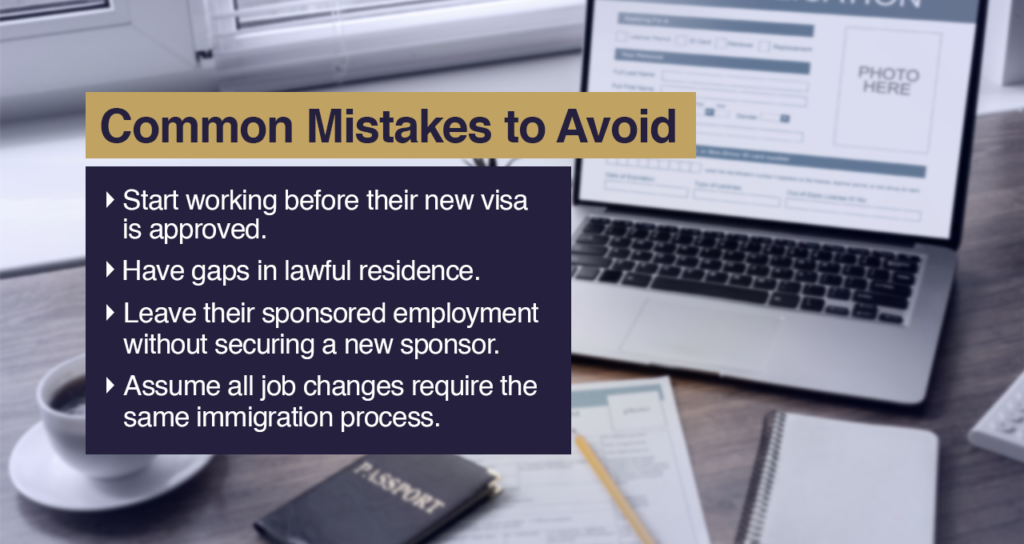
Common Mistakes to Avoid:
Changing jobs can become problematic when applicants:
- Start working before their new visa is approved.
- Leave their sponsored employment without securing a new sponsor.
- Have gaps in lawful residence.
- Assume all job changes require the same immigration process.
Every situation is different, especially if your previous employment ended unexpectedly or your role changed significantly. Seeking legal advice early can help you avoid mistakes that may delay your settlement plans.
How We Help Skilled Workers in Manchester:
At Intime Immigration Solicitors, we regularly advise workers who want to change employers while protecting their long-term immigration goals. Whether you need guidance from a skilled worker visa solicitor in Manchester or are preparing your settlement application, we provide practical advice tailored to your circumstances.
We help clients:
- Apply for a skilled worker visa with a new sponsor.
- Review whether a job change could affect future settlement.
- Prepare strong ILR applications.
- Resolve concerns about continuous residence and eligibility.
If your current employment has ended, we can also advise you on your available options before your visa is affected.
You can also learn more about our skilled worker visa services, our indefinite leave to remain support, or read our guide on what happens if your job ends early. Contact our immigration lawyers for legal support.
Frequently Asked Questions:
Can I change jobs while on a skilled worker visa?
Yes. You can change jobs, provided your new employer is an approved sponsor and you obtain the necessary permission before starting your new role.
Will changing employers restart my five-year ILR qualifying period?
Not usually. Your qualifying period can continue as long as you remain lawfully in the Skilled Worker route and meet the continuous residence requirements.
When should I speak to a solicitor?
It is best to seek legal advice before changing employers, especially if you are close to applying for settlement or have concerns about your immigration history.
Plan Ahead for a Stronger ILR Application:
Changing employers is often part of career progression, but it should always be handled carefully from an immigration perspective. Receiving advice before making the move can help you avoid unnecessary delays or complications later.
If you are looking for experienced indefinite leave to remain lawyers in Manchester, our team at Intime Immigration Solicitors is here to help. We provide clear, practical immigration advice so you can move forward with confidence.
Call us today to discuss your skilled worker visa or ILR plans.
Visit our website to learn more about our immigration and UK visa services.