

If you entered the UK on a fiancé visa, getting married is only the beginning of your next immigration step. You cannot simply remain in the UK because your marital status has changed. After your wedding, you generally need to apply for a family visa as a spouse before your fiancé’s permission expires. The good news is that you can make the application yourself without instructing a solicitor, provided you understand the requirements and prepare your evidence carefully.
Can you switch from a fiancé visa to a spouse visa in the UK?
Yes. A person who entered the UK on a six-month fiancé, fiancée or proposed civil partner visa can apply from inside the UK after getting married. The new application is essentially an application to extend permission as a spouse under the family route. You must apply before your existing permission expires.
Understanding the difference between the two routes can also help. Our guide on spouse visa or fiancé visa in Stoke-on-Trent and which route is right for your relationship explains how these two family routes work.
How to switch fiancé visa to spouse visa: Step-by-step:
1. Get legally married in the UK
Your marriage must be legally recognised in the UK. A fiancé visa normally gives you six months to marry or enter into a civil partnership. Until you marry, you cannot work or study under this visa.
Once your marriage has taken place, obtain your marriage certificate because it will form an important part of your spouse visa application after marriage.
2. Check the spouse visa requirements:
Before completing the application, check that you and your partner satisfy the relevant spouse visa requirements. You generally need to demonstrate a genuine relationship, intend to live together permanently in the UK, meet the English-language requirement and satisfy the financial rules.
For most new applications, the spouse visa financial requirement is a combined gross annual income of at least £29,000. Depending on your circumstances, permitted savings or other sources of income may also be relevant.
3. Prepare your supporting documents:
Your documents should support every part of the application. Depending on your circumstances, these can include your marriage certificate, passports, evidence of your partner’s immigration status, financial documents, accommodation evidence and proof of your relationship.
Government guidance also identifies evidence such as tenancy agreements, utility or Council Tax bills, joint bank statements and other documents showing your shared life as useful relationship evidence.
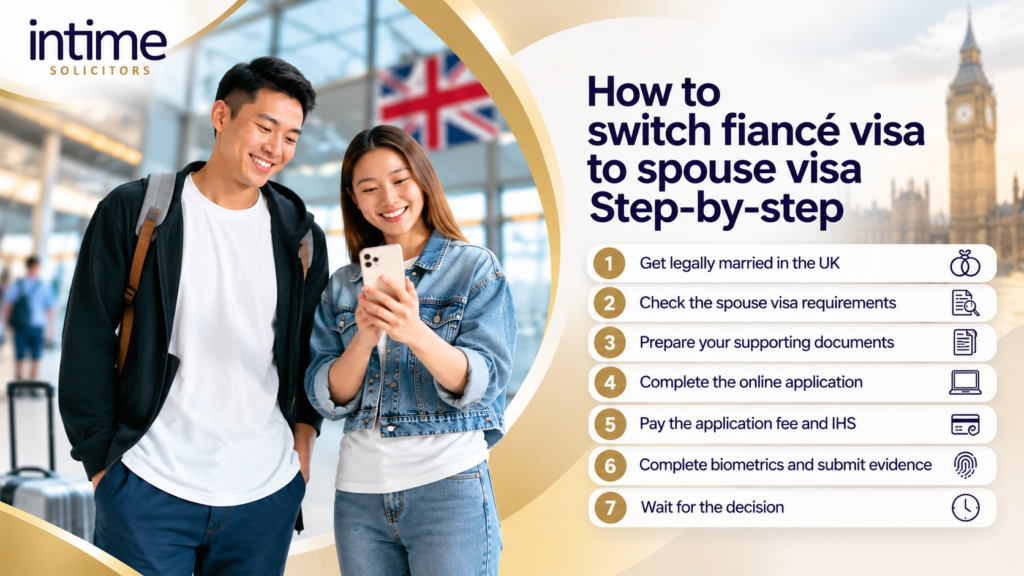
4. Complete the online application:
You can submit the application online from within the UK. Carefully enter information about your relationship, immigration history, finances and accommodation. Check every answer before submitting, particularly dates and details from previous applications.
Applying yourself means you do not have to use a fiancé visa solicitor, but professional advice can still be useful where your circumstances are complicated or you are uncertain about eligibility.
5. Pay the application fee and IHS:
The current in-country family visa application fee for joining a partner is £1,407. You will generally also need to pay the Immigration Health Surcharge. For most applicants, the IHS is £1,035 per year, with the total depending on the period of permission granted.
6. Complete biometrics and submit evidence:
After applying, you will be told how to provide your fingerprints and photograph. You may also need to upload or submit your supporting evidence as instructed.
7. Wait for the decision:
For an in-country partner or spouse application that meets the financial and English-language requirements, the current standard processing time is usually up to eight weeks, although processing can vary.
What if your fiancé visa is about to expire?
Do not wait until after expiry if you can avoid it. Your application should be submitted while your existing permission is still valid. If your circumstances mean you cannot marry or apply before the deadline, the situation requires careful consideration; a spouse visa extension after marriage is not simply an automatic extension of your existing visa.
Can you work after switching to a spouse visa?
A fiancé visa does not normally allow you to work or study. Once your spouse application is approved, the family visa gives you permission to work and study in the UK.
The spouse route can eventually lead to settlement. However, time spent in the UK as a fiancé does not count towards the five-year partner route for ILR. The five-year qualifying period is based on time on the relevant family visa as a partner.
Frequently Asked Questions:
Can I switch from a fiancé visa to a spouse visa in the UK?
Yes. After marrying your partner in the UK, you can apply from inside the UK to extend your stay as their spouse, provided you meet the requirements.
Do I need a solicitor to switch from a fiancé visa to a spouse visa?
No. You can complete the application yourself. However, professional assistance may be worthwhile if your finances, relationship evidence or immigration history is complicated.
When should I apply for a spouse visa after getting married?
Apply after your marriage and before your fiancé’s permission expires. Avoid leaving the application until the final days.
What documents do I need to switch from a fiancé visa to a spouse visa?
Typically, you will need your marriage certificate, identity documents, financial evidence, accommodation information and evidence supporting your relationship. Your exact evidence depends on your circumstances.
How much does it cost to switch from a fiancé visa to a spouse visa?
The current in-country application fee is £1,407, plus the applicable Immigration Health Surcharge.
Does fiancé visa time count towards the five-year settlement route?
No. Time spent as a fiancé, fiancée or proposed civil partner is excluded from the five-year partner route to settlement.
At Intime Immigration Solicitors, we understand that preparing a fiancé visa to spouse visa UK application can feel overwhelming, particularly when you are managing marriage arrangements at the same time. We provide tailored immigration guidance for applicants who want to understand their options, check their evidence and approach the application with greater confidence.
You can also explore our guide to the UK spouse visa extension timeline in Chester and what happens after you apply, for more information about the next stages of the family route.